The Gallery
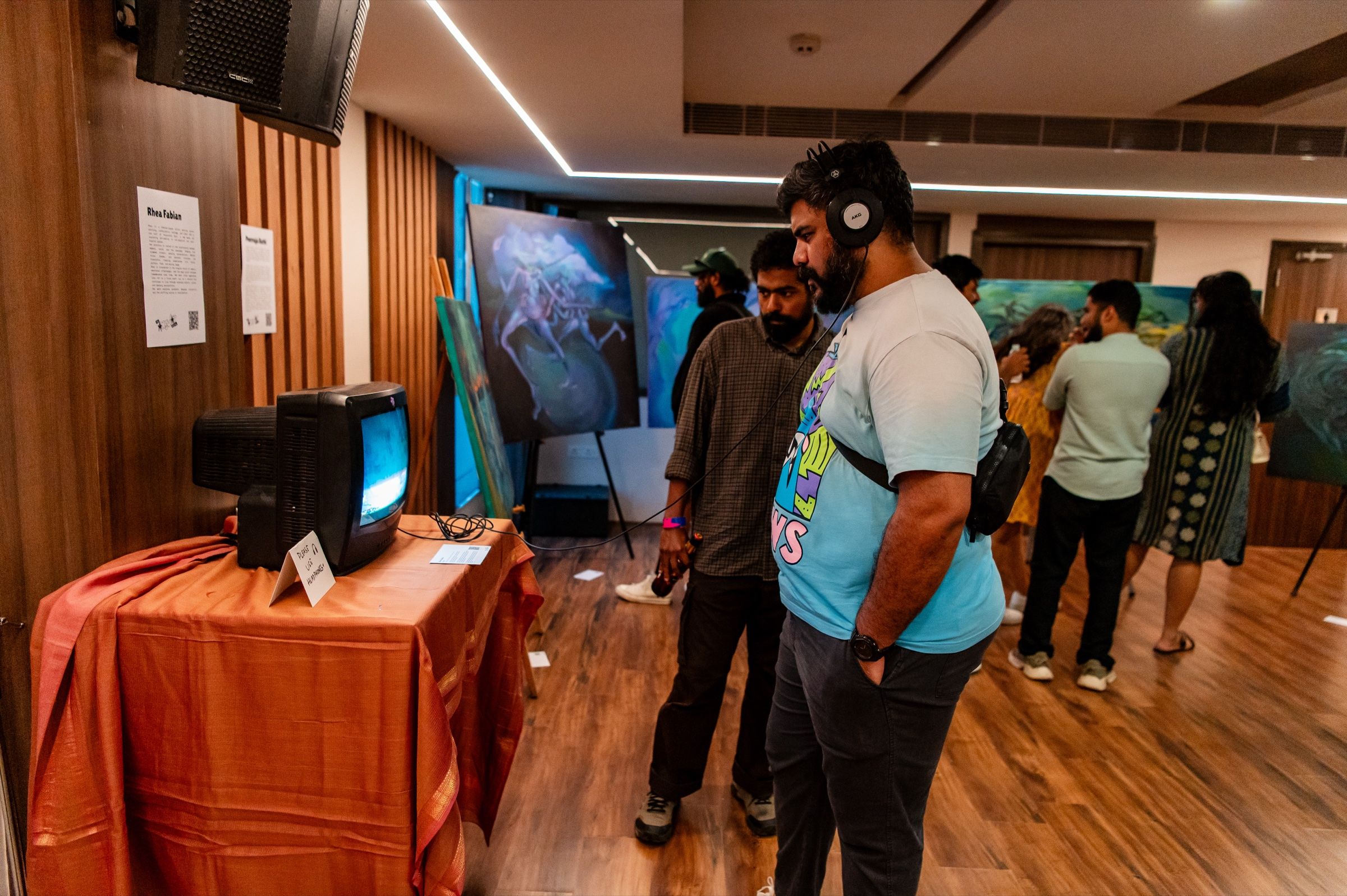
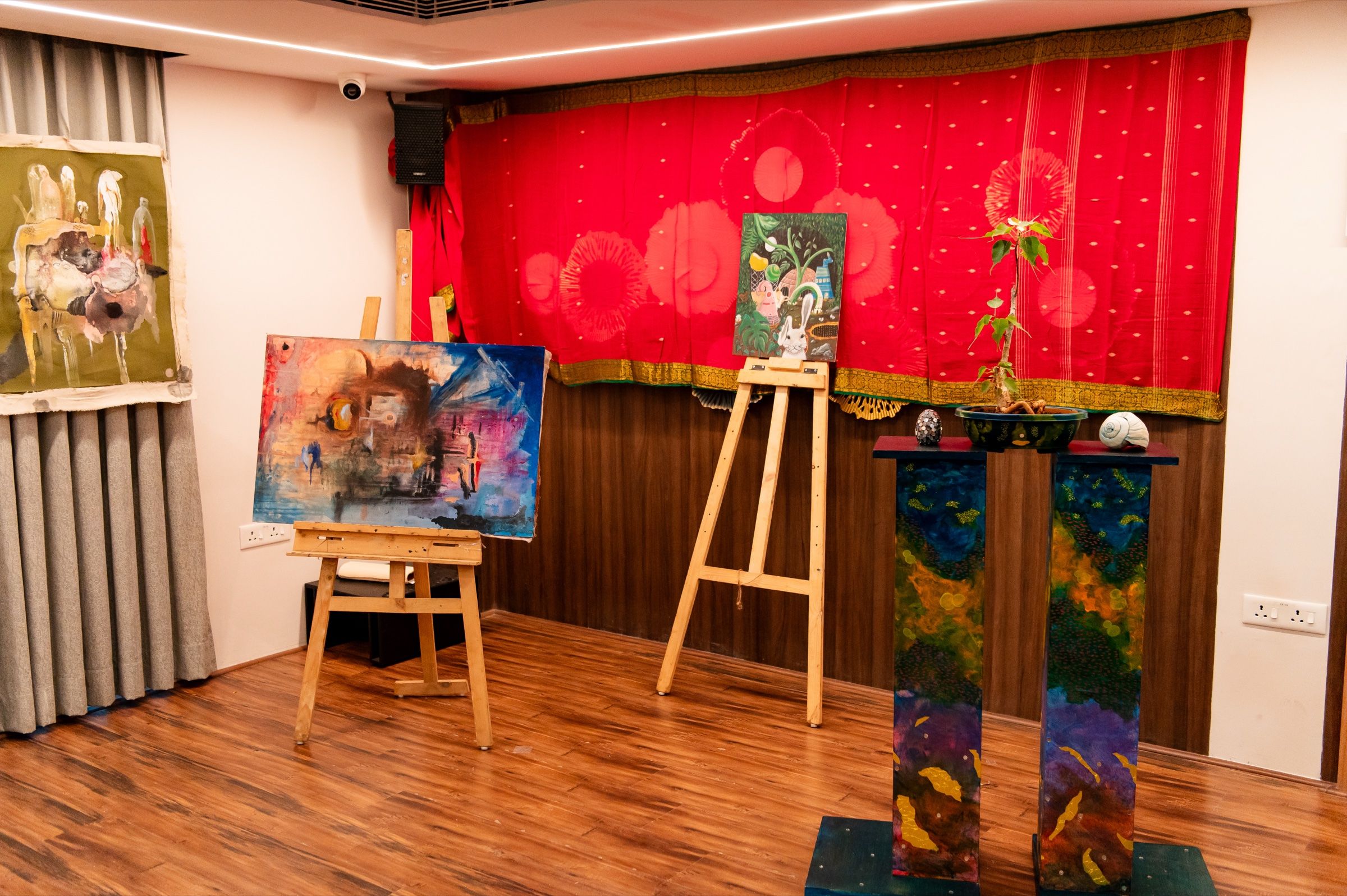
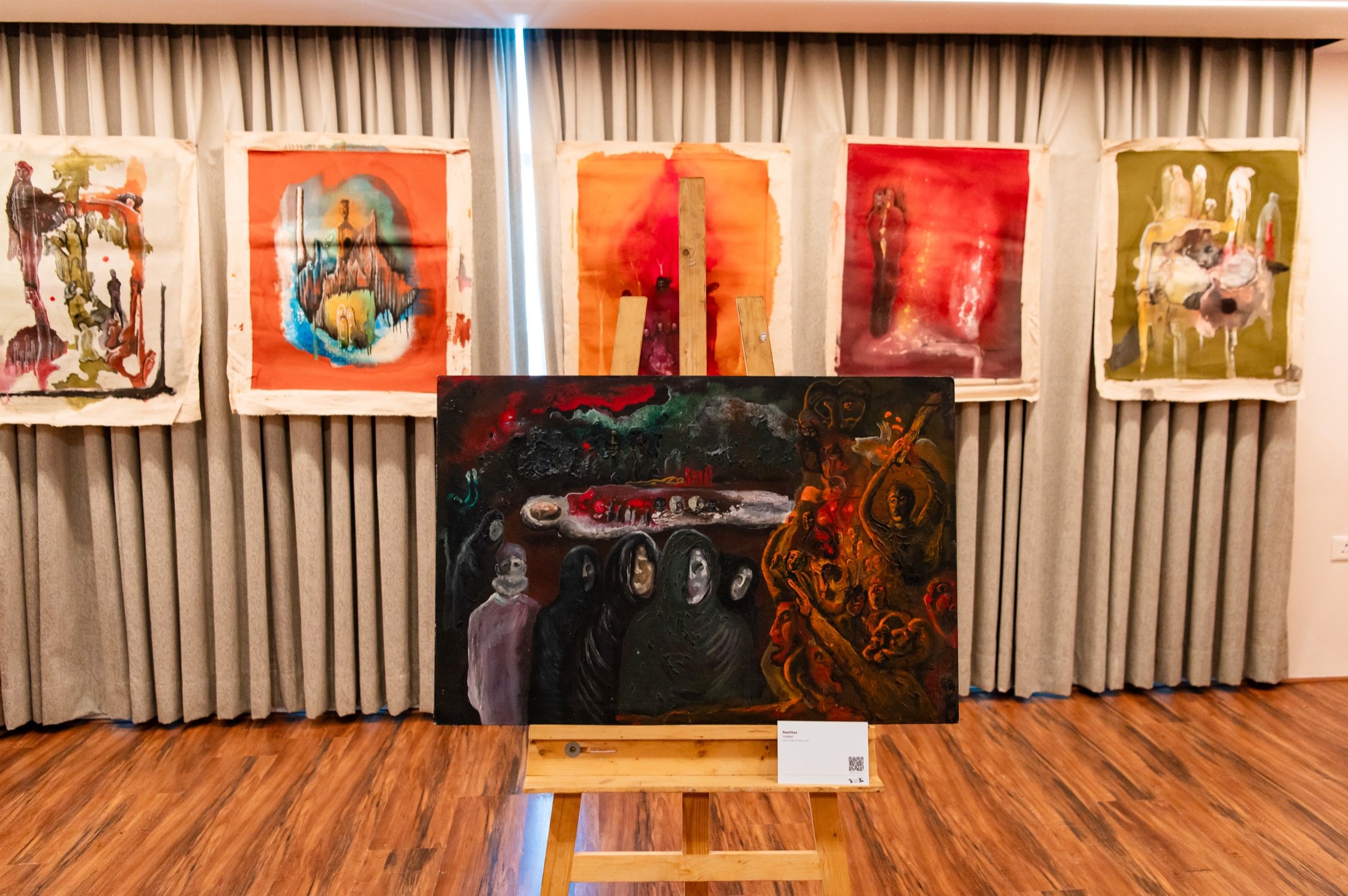
Rhea invited each artist individually after spending time with their work, speaking with them about their practice, and understanding the ideas and processes behind it. The exhibition was built around living, local, young practising artists from varied backgrounds, and the connections between their approaches rather than around a theme imposed in advance.
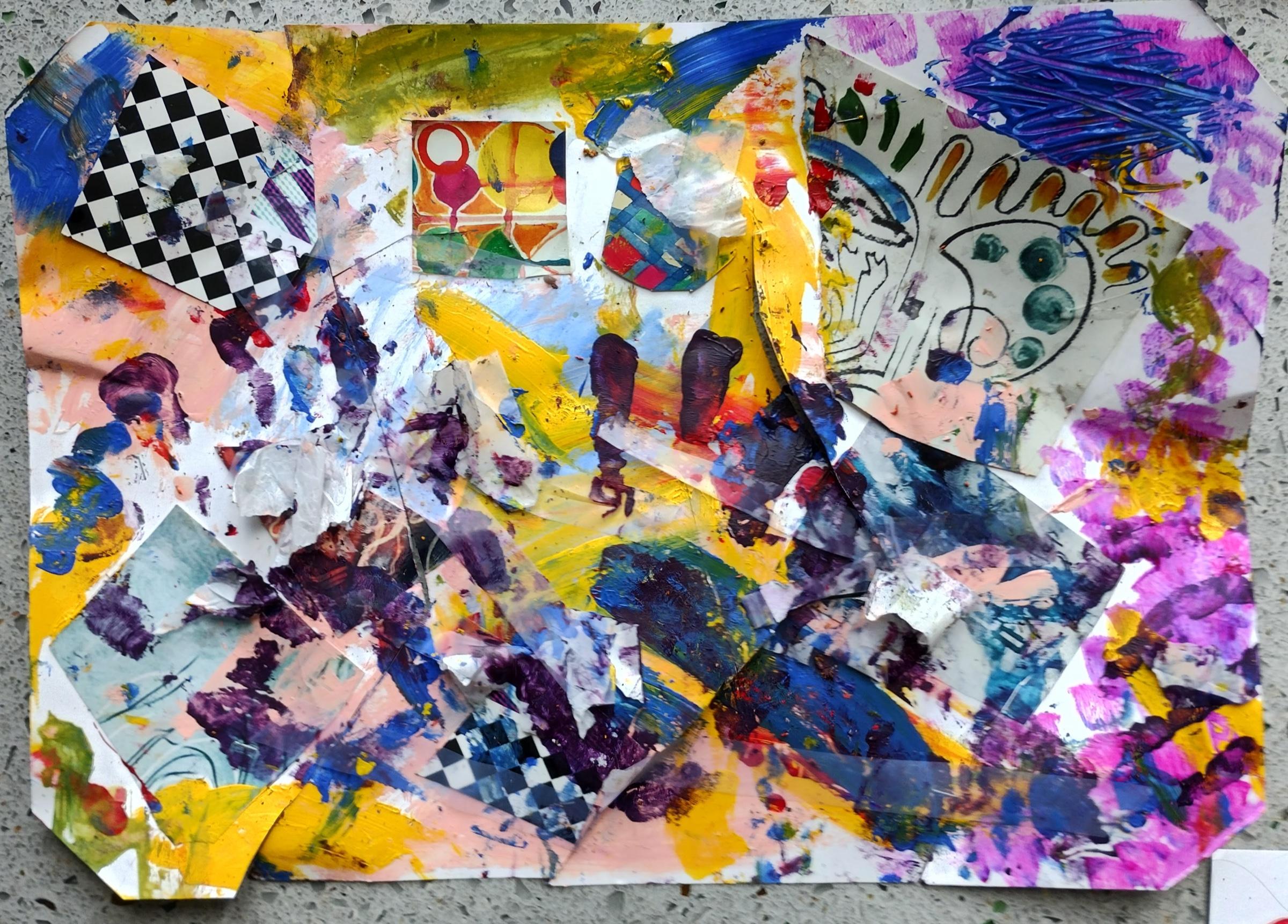
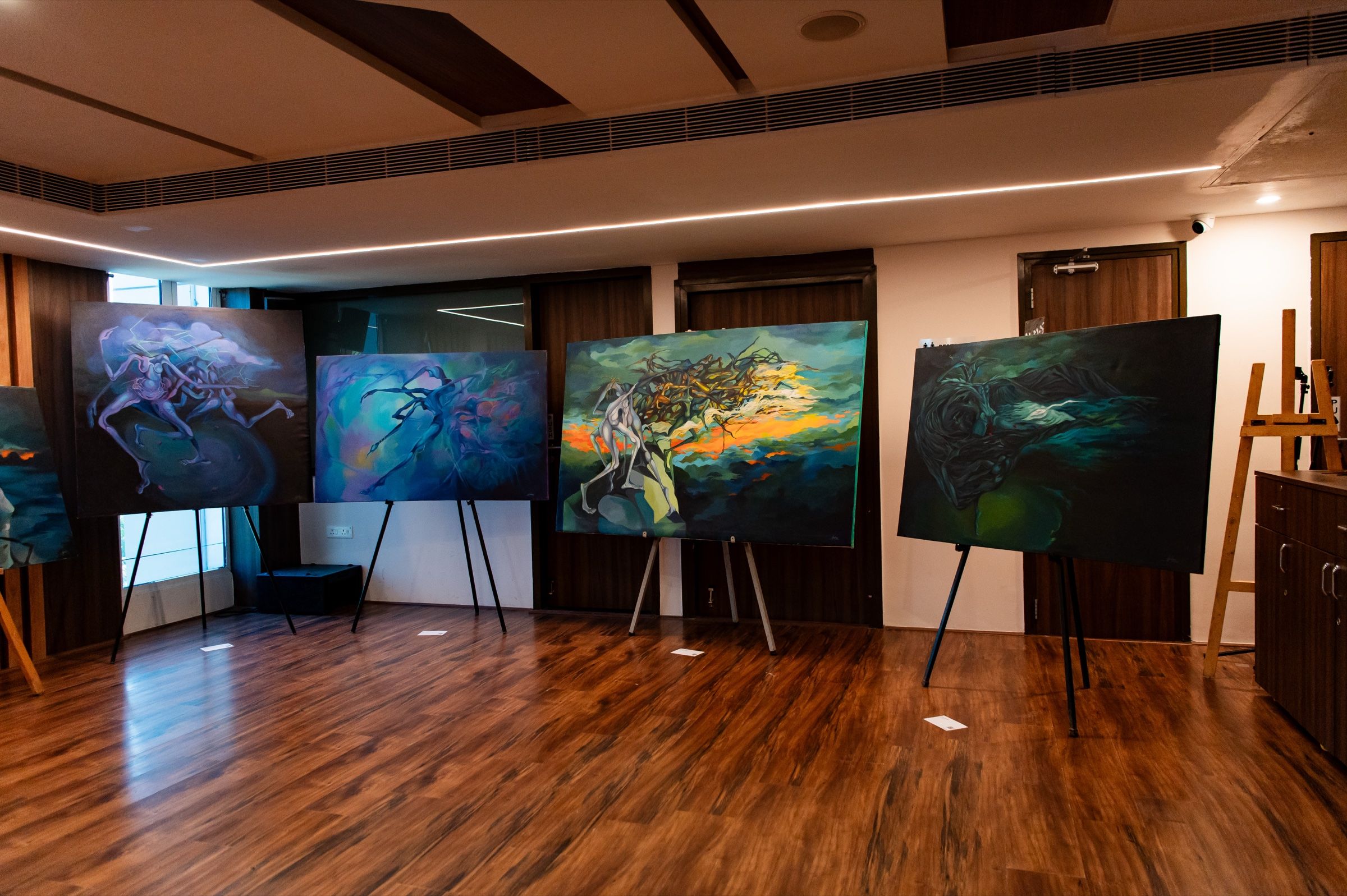
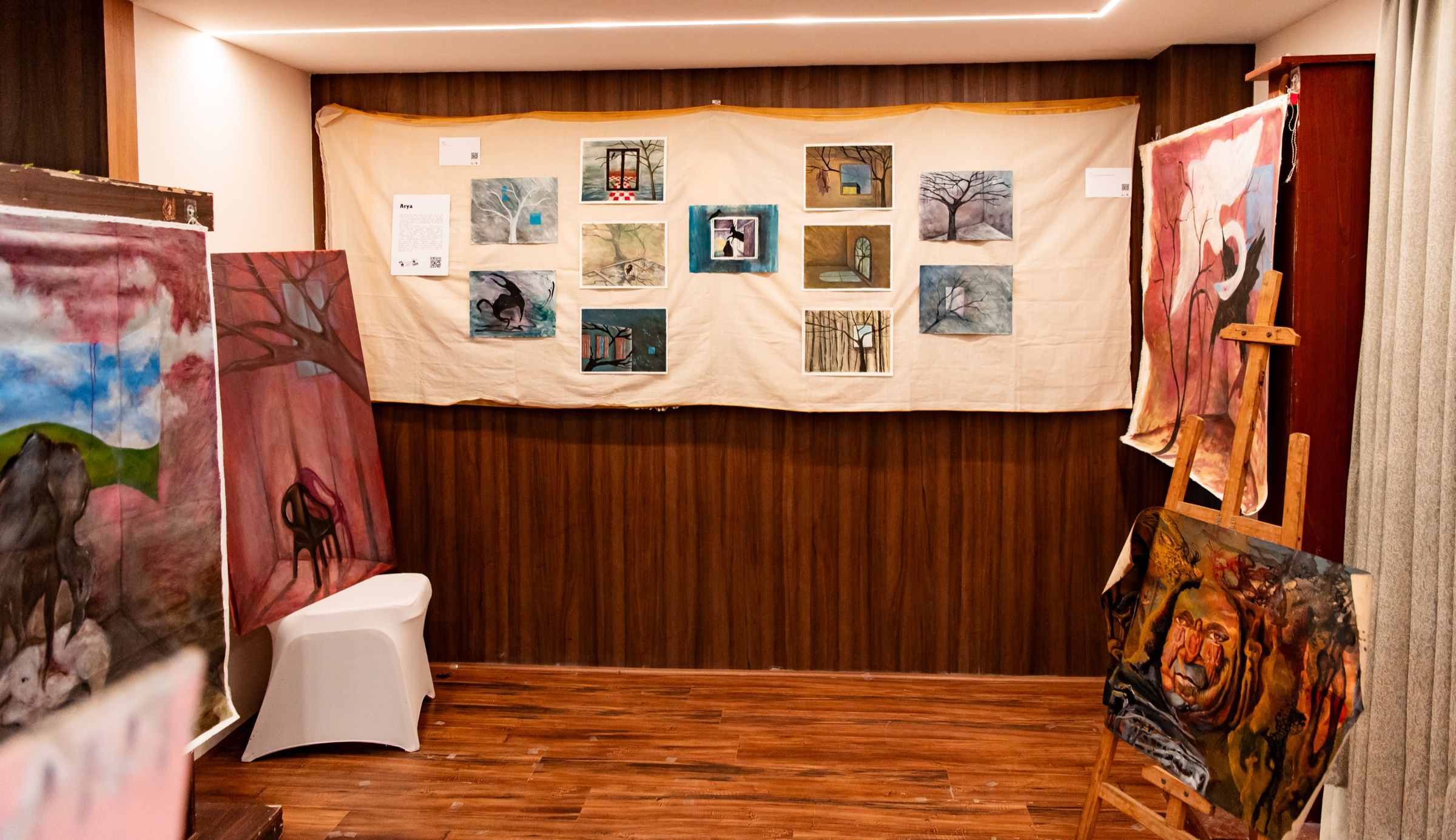
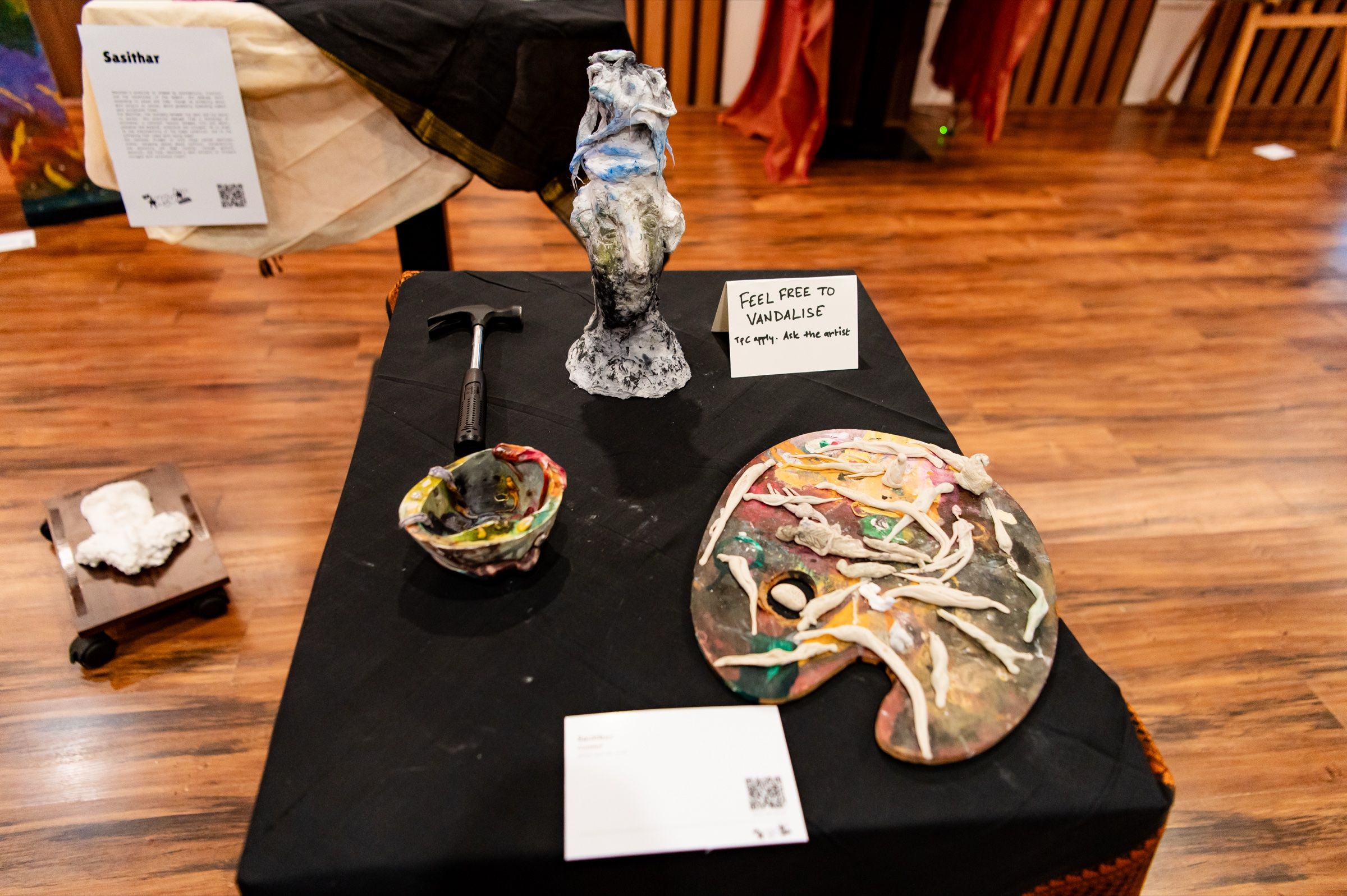
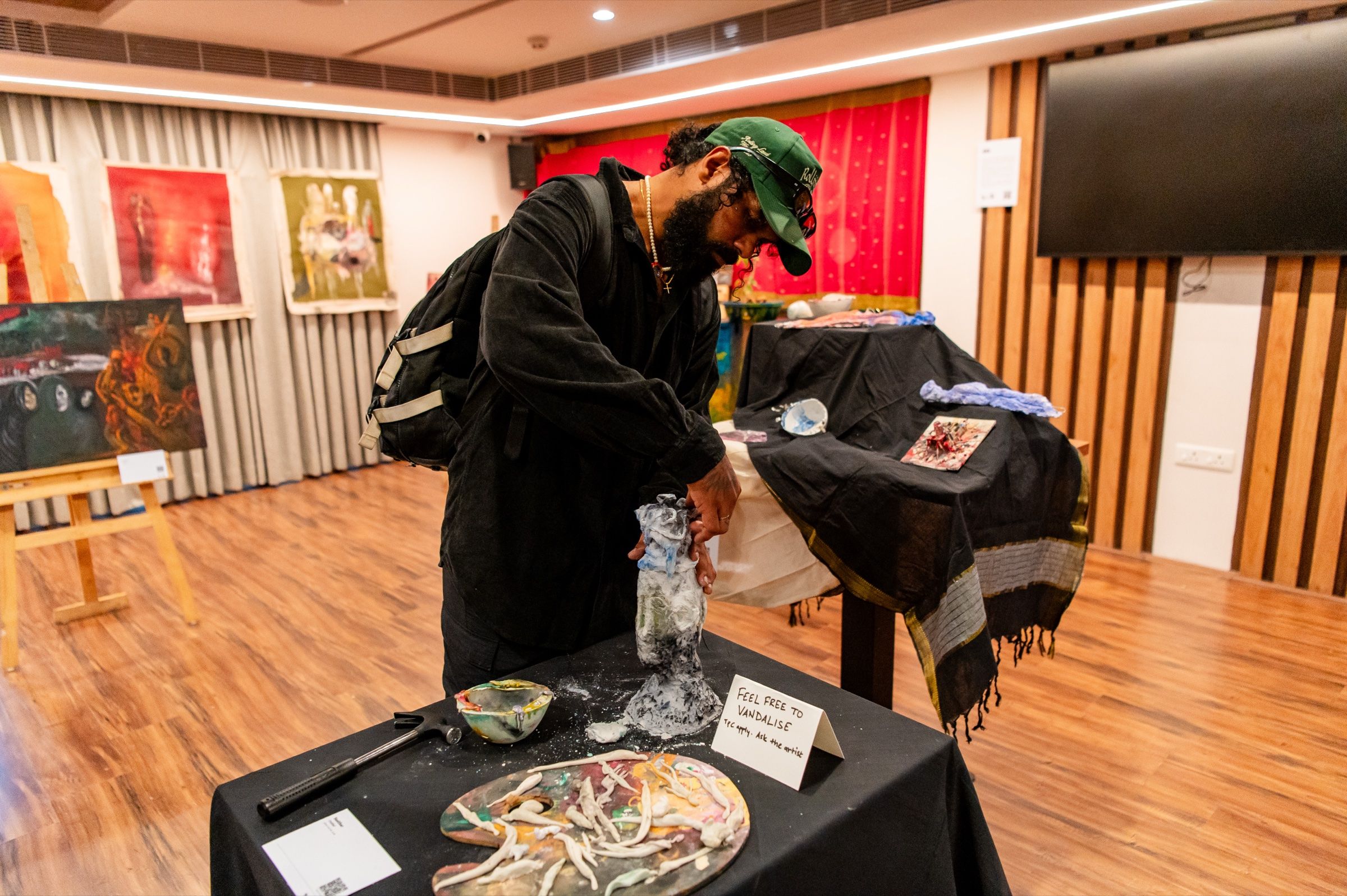
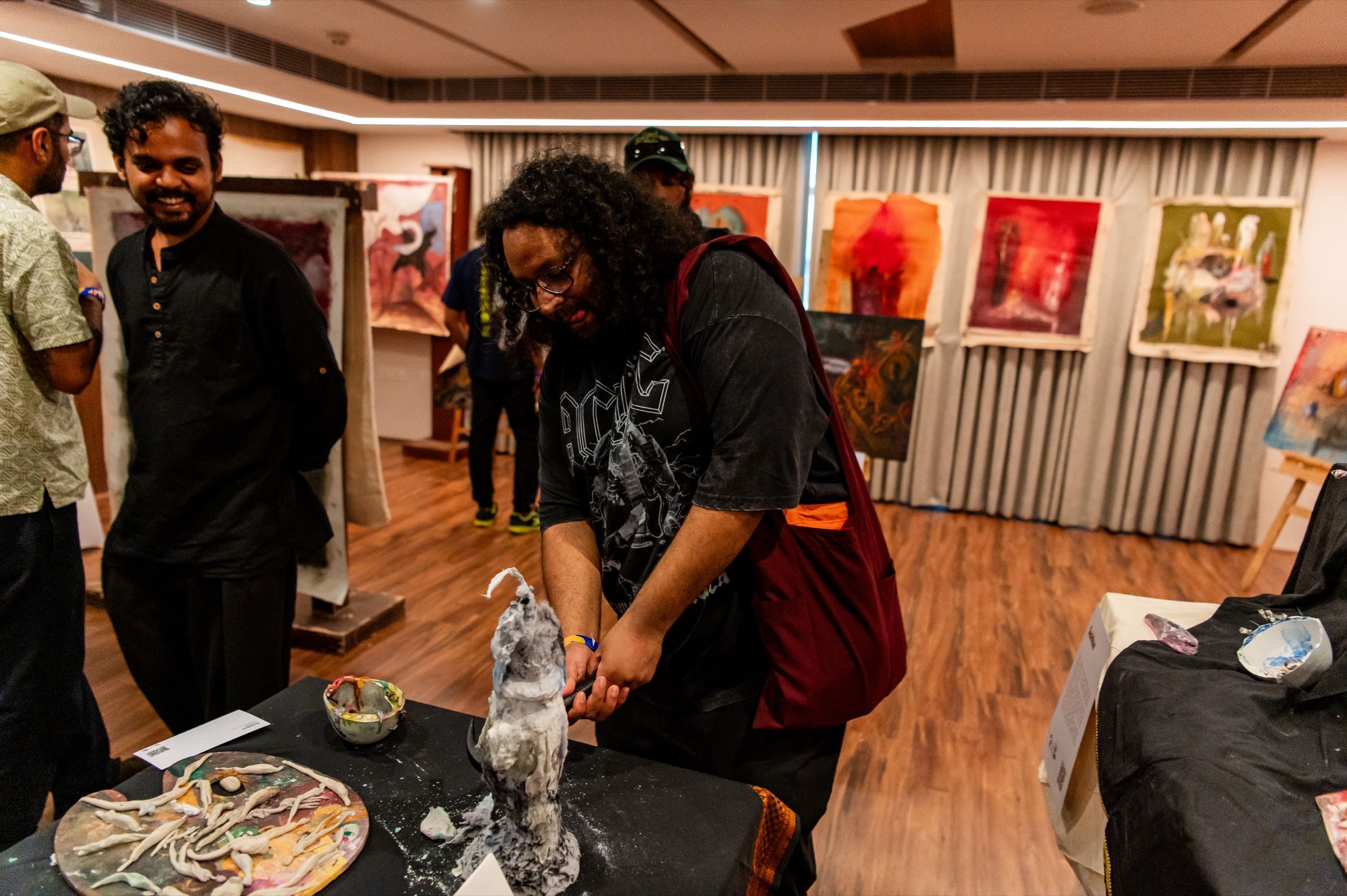
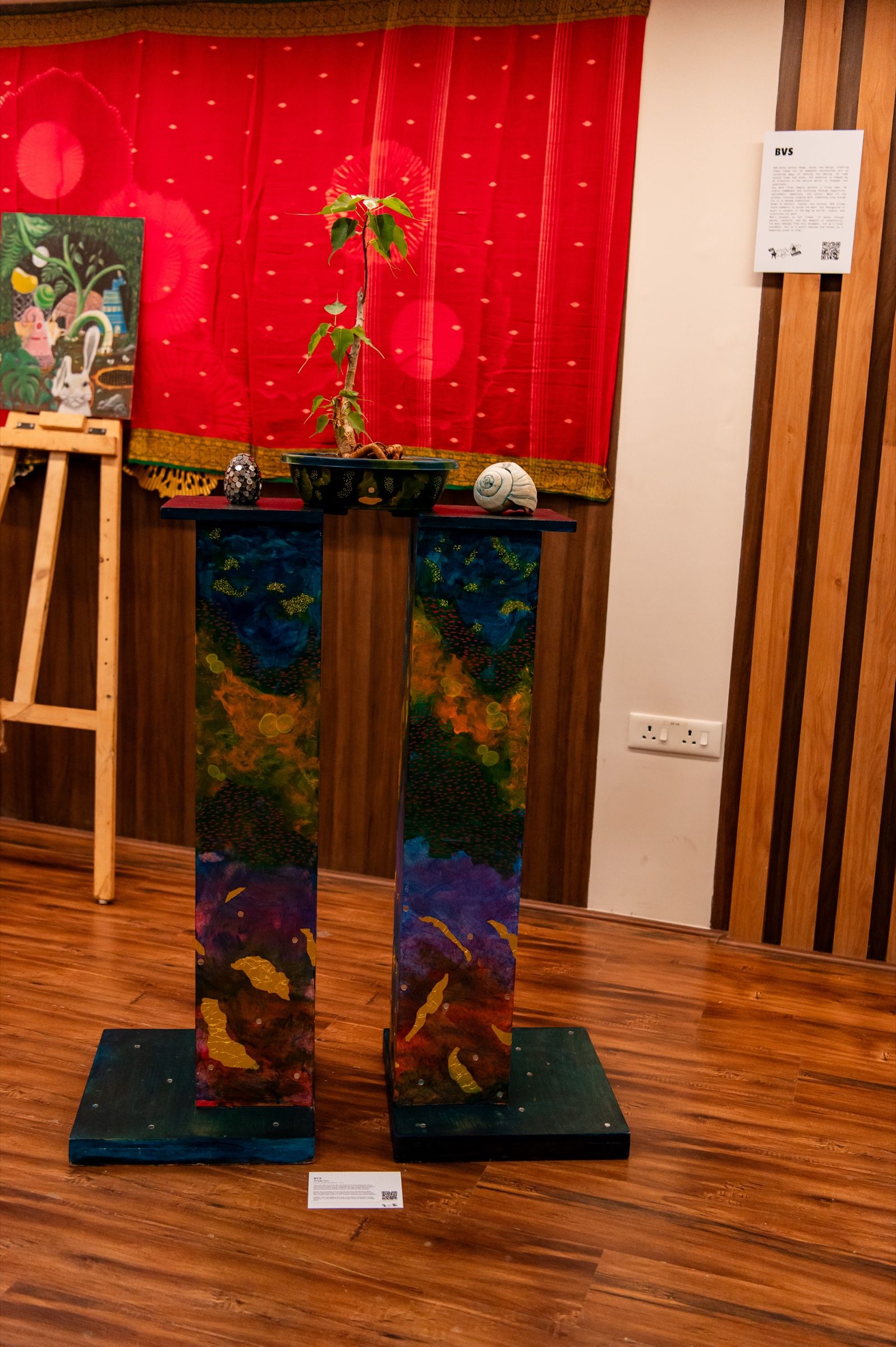
Across painting, moving image, sculpture and mixed media, the artists looked to the world around them to give form to experiences that can be difficult to see or articulate. Memory, dreams, grief, anxiety, instinct, mortality and a shifting sense of self emerged across the work.
An accessible exhibition
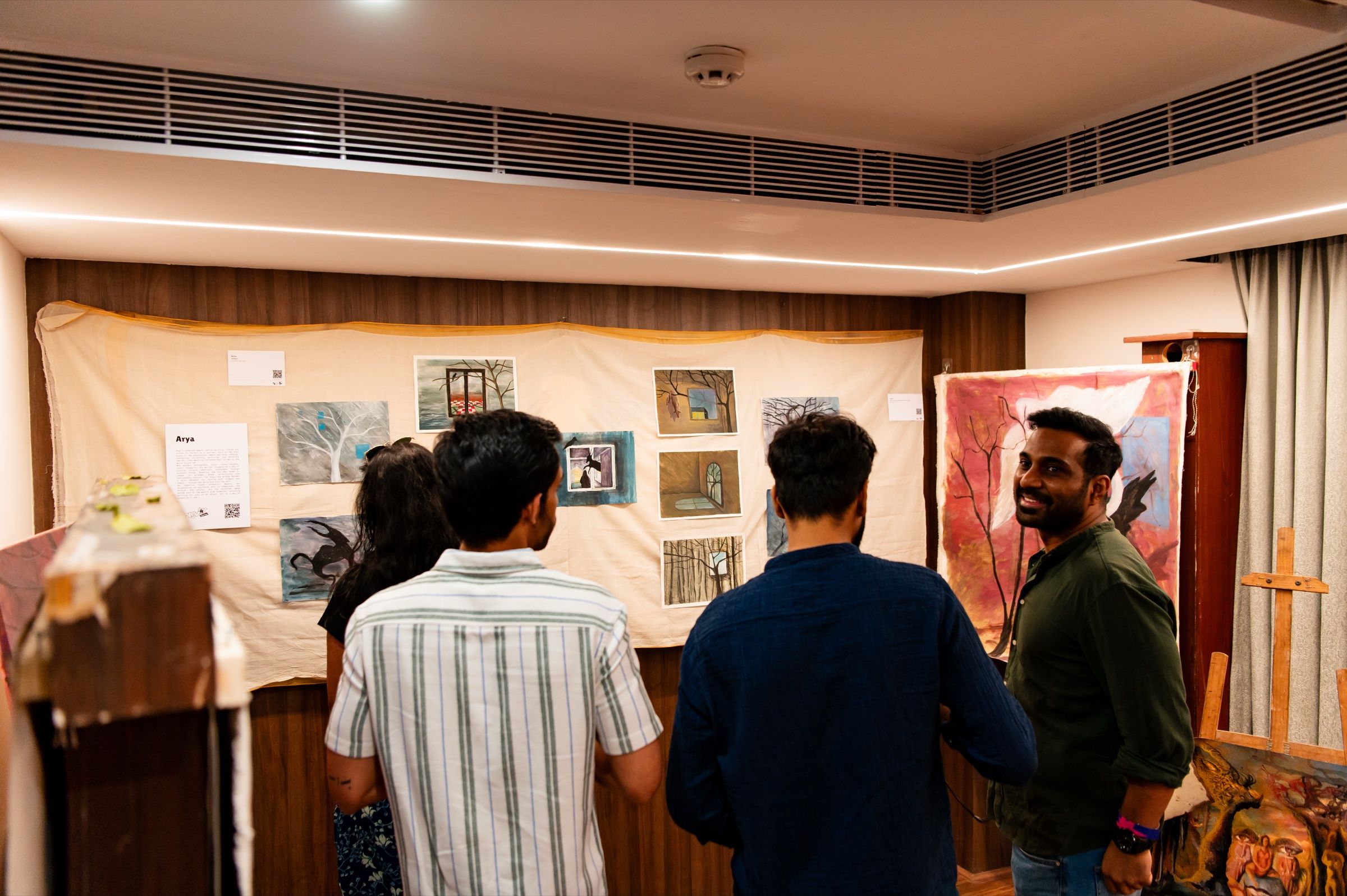
Each work was accompanied by a short, easy-to-read text introducing its context, themes and inspirations, while each artist had a brief introduction to their wider practice. QR codes connected visitors directly to the artists' platforms, allowing those encounters to continue beyond the festival.
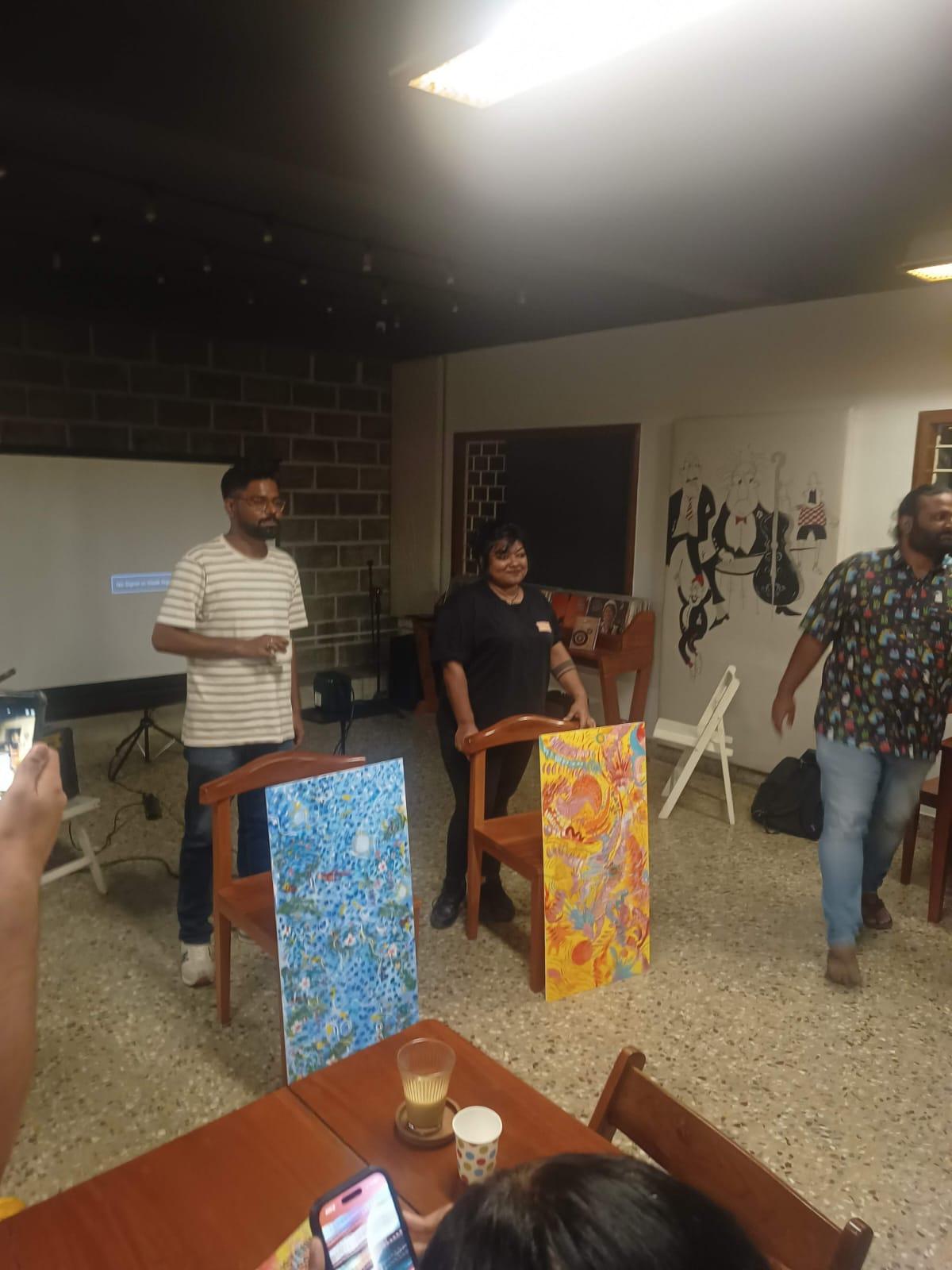
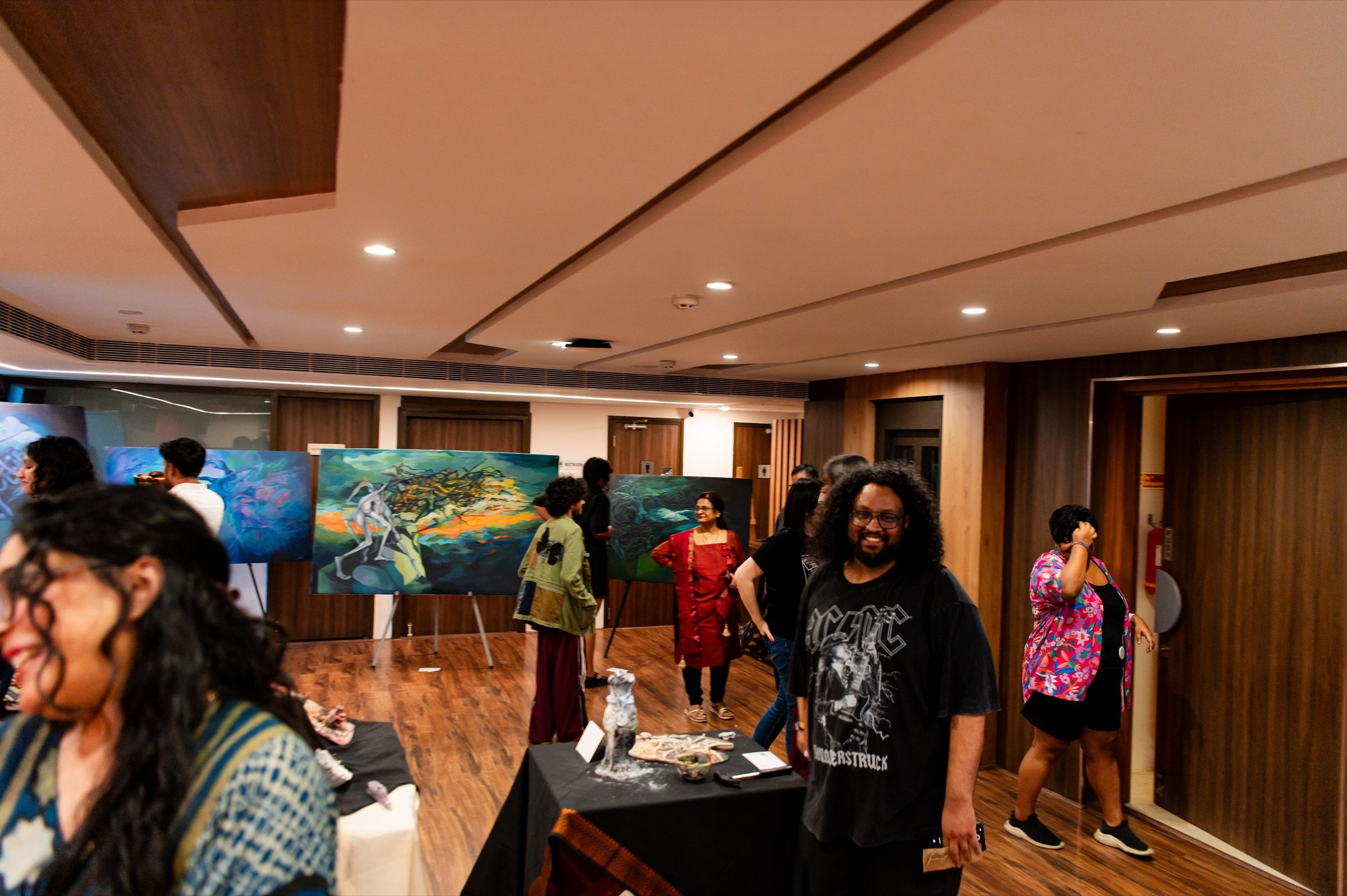
The artists were present throughout the exhibition, encouraging visitors to speak with them directly rather than positioning the gallery as a space that required prior knowledge to enter.
Each artist was given a distinct area shaped around their own vision for displaying the work. Rhea worked with them individually while guiding placement, transitions and movement so that five different practices could retain their identities within a coherent experience.
The Maker's Market
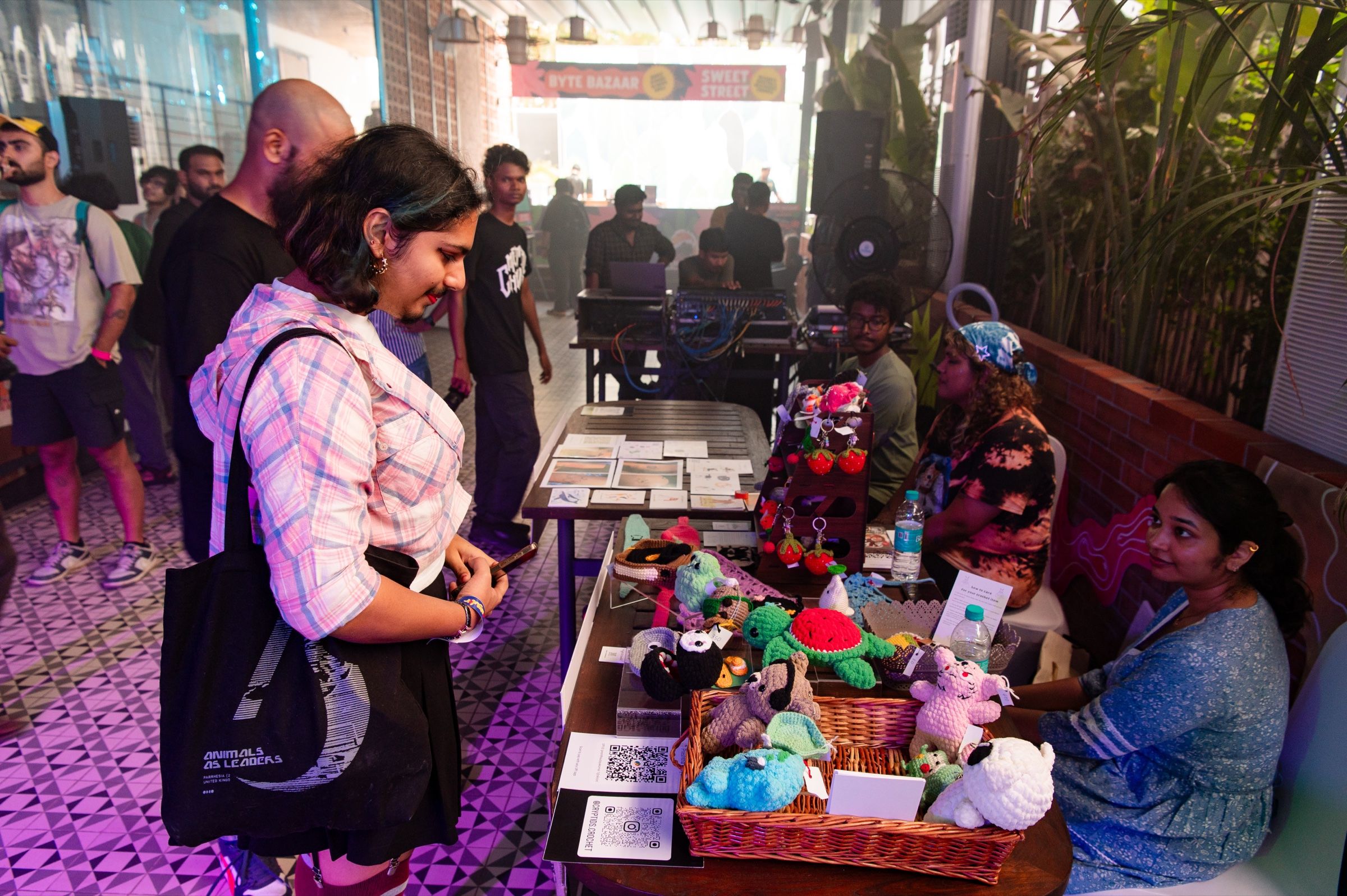
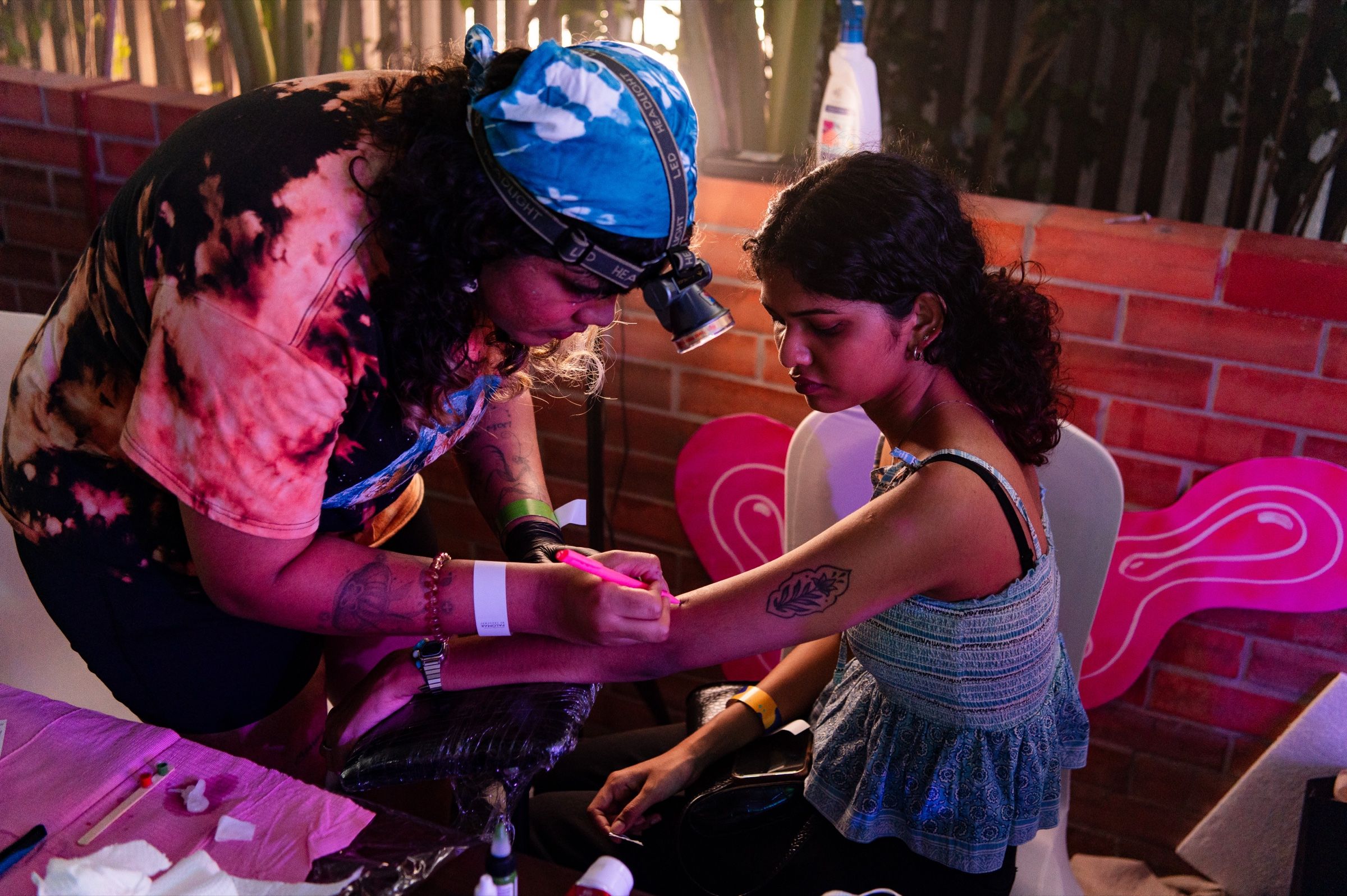
The Maker's Market was designed to be playful, indie, and rooted in the alternative and punk spirit of the festival. It platformed local independent practices, particularly those led by queer, women and non-binary makers.
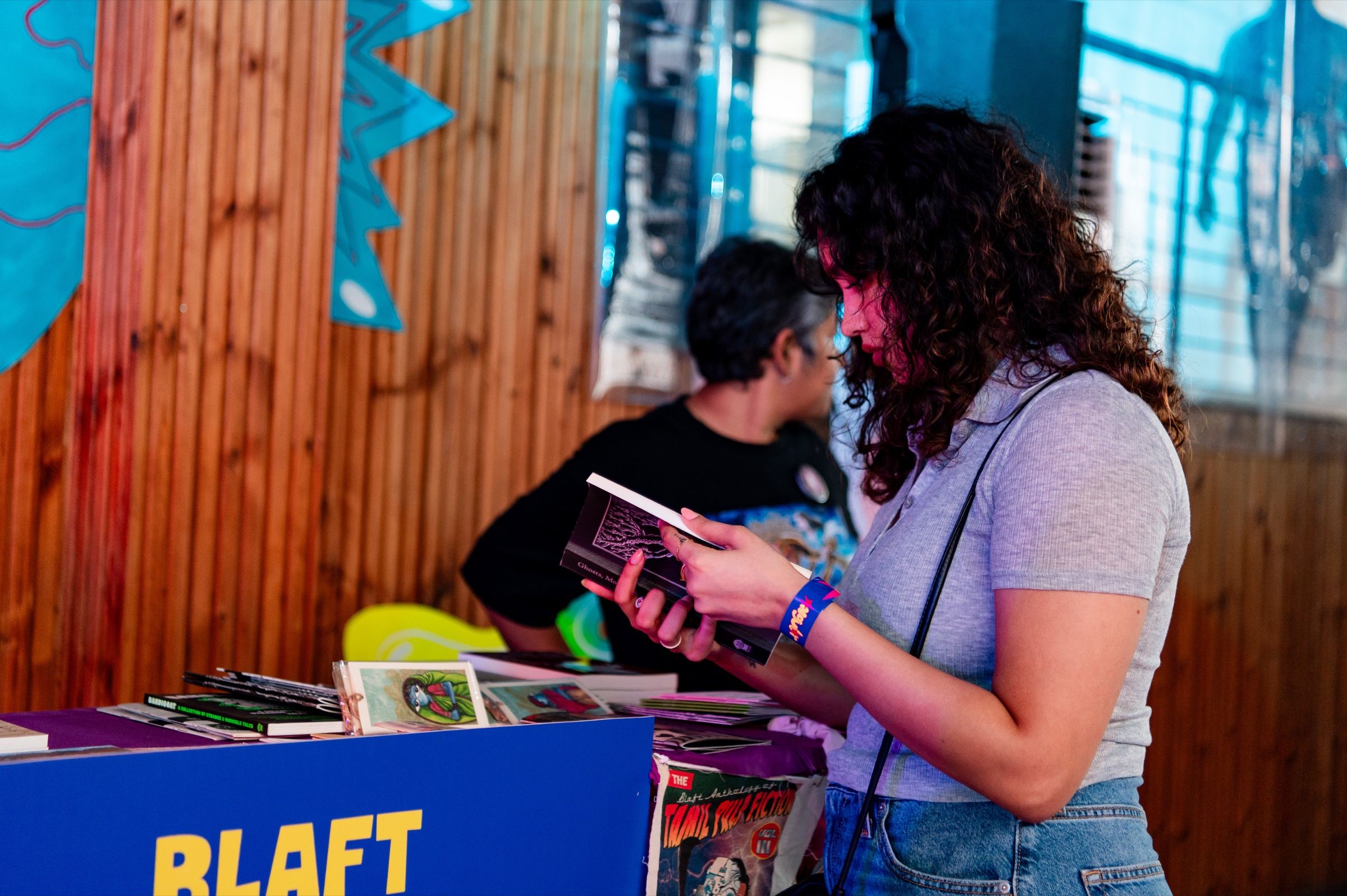
The selection brought together Cryptids Crochet, Mothieboi Tats, NotYourCatButt and Poorvaja Rathi across crochet, hand-poke tattooing, illustration, zines, prints and artist-made collectables. Blaft Publications brought a catalogue spanning folklore, weird fiction, anti-caste speculative fiction, graphic novels, zines and street art.
Rather than filling the space with as many stalls as possible, each table brought its own world into the festival. Together they encouraged browsing, conversation and discovery while giving visitors a direct way to support independent artists, makers and publishers.